

Energy catalysis represents a pivotal domain in contemporary scientific research. Nevertheless, the inherent complexity of many associated problems, influenced by numerous factors, surpasses the capabilities of traditional theoretical models. This raises a critical inquiry: can theoretical computations reliably anticipate experimental outcomes? I will present our recent progress in the interdisciplinary intersection of energy science and data science. AI technology is demonstrating robust auxiliary capabilities in catalyst material design, the establishment of catalysis theoretical models, experimental data mining, and various other aspects. This trend positions it as a prospective standard research tool in the field of energy catalysis in the near future.
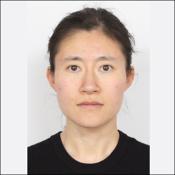
Dr. Haobo Li is an Assistant Professor and independent group leader in Nanyang Technological University (NTU), Singapore. Her research interests center around AI-driven energy chemistry. She received her Ph.D. in 2017 from Dalian Institute of Chemical Physics (DICP), Chinese Academy of Sciences (CAS). In 2018 she moved to Technical University of Munich (TUM) as an Alexander von Humboldt Postdoctoral Fellow. In 2022, Dr. Li joined The University of Adelaide, where she has been appointed as the sole Chief Investigator for an ARC (Australian Research Council) DECRA (Discovery Early Career Researcher Award) Fellowship. She was awarded the MIT Technology Review Innovators Under 35 (TR35, Asian Pacific) in 2023 and Highly Cited Researcher (Clarivate) since 2024. She has published over 70 refereed papers (including Science, PNAS, Nature Commun., JACS, Angew., AM, etc.) with a total citation of over 11,000 and an h-index of 41 (google scholar).

Energy catalysis represents a pivotal domain in contemporary scientific research. Nevertheless, the inherent complexity of many associated problems, influenced by numerous factors, surpasses the capabilities of traditional theoretical models. This raises a critical inquiry: can theoretical computations reliably anticipate experimental outcomes? I will present our recent progress in the interdisciplinary intersection of energy science and data science. AI technology is demonstrating robust auxiliary capabilities in catalyst material design, the establishment of catalysis theoretical models, experimental data mining, and various other aspects. This trend positions it as a prospective standard research tool in the field of energy catalysis in the near future.
Dr. Haobo Li is an Assistant Professor and independent group leader in Nanyang Technological University (NTU), Singapore. Her research interests center around AI-driven energy chemistry. She received her Ph.D. in 2017 from Dalian Institute of Chemical Physics (DICP), Chinese Academy of Sciences (CAS). In 2018 she moved to Technical University of Munich (TUM) as an Alexander von Humboldt Postdoctoral Fellow. In 2022, Dr. Li joined The University of Adelaide, where she has been appointed as the sole Chief Investigator for an ARC (Australian Research Council) DECRA (Discovery Early Career Researcher Award) Fellowship. She was awarded the MIT Technology Review Innovators Under 35 (TR35, Asian Pacific) in 2023 and Highly Cited Researcher (Clarivate) since 2024. She has published over 70 refereed papers (including Science, PNAS, Nature Commun., JACS, Angew., AM, etc.) with a total citation of over 11,000 and an h-index of 41 (google scholar).
