As part of its 2025 Christmas celebration, the Chair of Materials Science and Nanotechnology at TU Dresden launched a fundraising initiative in support of children with cancer. The funds raised will support a film project at the Department and Outpatient Clinic of Radiation Oncology at the University Hospital Carl Gustav Carus Dresden. The aim of the project is to explain therapy to young patients in an age-appropriate way and help reduce fear and uncertainty surrounding treatment.
The Chair of Materials Science and Nanotechnology at TU Dresden stands for interdisciplinary research at the interface of materials science, nanotechnology, biomedicine, and data-driven science. At the same time, it sees itself as an active part of society. For several years, the Chair has therefore used its Christmas celebration as an opportunity to raise funds for a charitable cause. Each year, the project to be supported is selected jointly.
In 2025, the decision was made deliberately in favor of pediatric oncology, with a particular focus on proton therapy. The main motivation was to support an initiative that would directly benefit young patients and help them during an especially difficult period in their lives.
The donation will help fund a film project designed to explain the course of cancer treatment to children in clear language and with accessible visual materials. The film is intended to provide guidance even before the start of the hospital stay, reduce uncertainty, and build trust in the treatment process. It is aimed at children and their families, many of whom come to Dresden for several weeks for therapy.
A cancer diagnosis in childhood places enormous emotional and organizational strain on both patients and their families. In many cases, treatment involves several weeks of chemotherapy followed by numerous radiation sessions. Proton therapy in particular, which can be used very gently in children because of its high precision, is available at only a small number of centers in Germany. As a result, many families must travel to Dresden for treatment and remain there for an extended period.
This makes support that goes beyond medical care all the more important. In addition to highly specialized treatment, clear communication, psychological support, and a child-friendly introduction to therapeutic procedures play a central role.
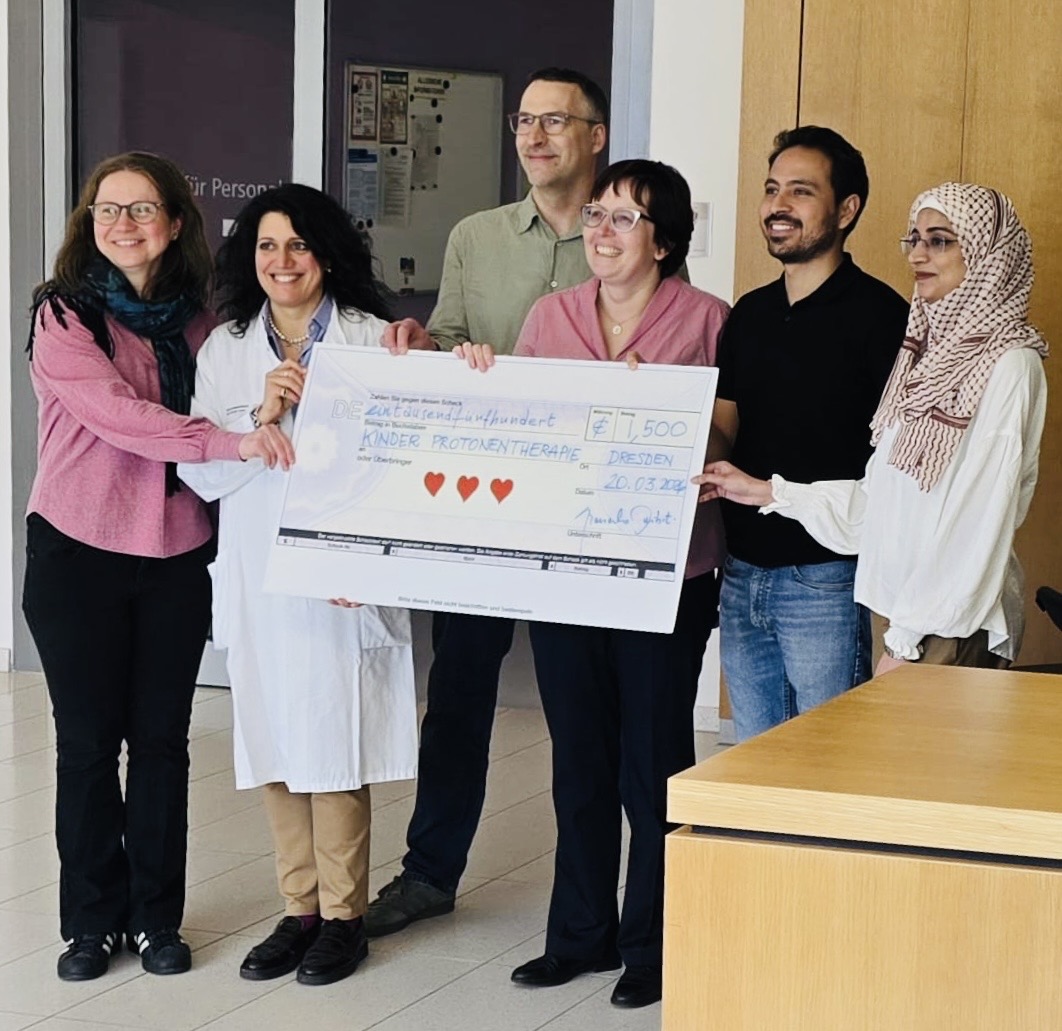
The donation was received by Prof. Dr. Mechthild Krause, Co-Director of the Department and Outpatient Clinic of Radiation Oncology, together with Senior Physician Dr. Chiara Valentini. “For children and their families, cancer therapy is associated with many uncertainties and fears. A film that explains the treatment in an age-appropriate way and makes the procedures understandable at an early stage can help build trust and make the start of therapy easier,” said Prof. Krause.
For the Chair of Materials Science and Nanotechnology, the initiative also reflects a deliberate commitment to social responsibility. “Scientific responsibility does not end at the laboratory door. With our donation, we want to support a project that provides concrete help to children in a difficult situation and shows how research, social engagement, and human compassion can work together,” said Prof. Dr. Gianaurelio Cuniberti, Head of the Chair.
By supporting this film project, the Chair is helping to strengthen care for young cancer patients in Dresden not only medically, but also on a human level. The initiative is therefore an example of how scientific excellence, social responsibility, and tangible benefit for affected families can be meaningfully combined.
As part of its 2025 Christmas celebration, the Chair of Materials Science and Nanotechnology at TU Dresden launched a fundraising initiative in support of children with cancer. The funds raised will support a film project at the Department and Outpatient Clinic of Radiation Oncology at the University Hospital Carl Gustav Carus Dresden. The aim of the project is to explain therapy to young patients in an age-appropriate way and help reduce fear and uncertainty surrounding treatment.
The Chair of Materials Science and Nanotechnology at TU Dresden stands for interdisciplinary research at the interface of materials science, nanotechnology, biomedicine, and data-driven science. At the same time, it sees itself as an active part of society. For several years, the Chair has therefore used its Christmas celebration as an opportunity to raise funds for a charitable cause. Each year, the project to be supported is selected jointly.
In 2025, the decision was made deliberately in favor of pediatric oncology, with a particular focus on proton therapy. The main motivation was to support an initiative that would directly benefit young patients and help them during an especially difficult period in their lives.
The donation will help fund a film project designed to explain the course of cancer treatment to children in clear language and with accessible visual materials. The film is intended to provide guidance even before the start of the hospital stay, reduce uncertainty, and build trust in the treatment process. It is aimed at children and their families, many of whom come to Dresden for several weeks for therapy.
A cancer diagnosis in childhood places enormous emotional and organizational strain on both patients and their families. In many cases, treatment involves several weeks of chemotherapy followed by numerous radiation sessions. Proton therapy in particular, which can be used very gently in children because of its high precision, is available at only a small number of centers in Germany. As a result, many families must travel to Dresden for treatment and remain there for an extended period.
This makes support that goes beyond medical care all the more important. In addition to highly specialized treatment, clear communication, psychological support, and a child-friendly introduction to therapeutic procedures play a central role.
The donation was received by Prof. Dr. Mechthild Krause, Co-Director of the Department and Outpatient Clinic of Radiation Oncology, together with Senior Physician Dr. Chiara Valentini. “For children and their families, cancer therapy is associated with many uncertainties and fears. A film that explains the treatment in an age-appropriate way and makes the procedures understandable at an early stage can help build trust and make the start of therapy easier,” said Prof. Krause.
For the Chair of Materials Science and Nanotechnology, the initiative also reflects a deliberate commitment to social responsibility. “Scientific responsibility does not end at the laboratory door. With our donation, we want to support a project that provides concrete help to children in a difficult situation and shows how research, social engagement, and human compassion can work together,” said Prof. Dr. Gianaurelio Cuniberti, Head of the Chair.
By supporting this film project, the Chair is helping to strengthen care for young cancer patients in Dresden not only medically, but also on a human level. The initiative is therefore an example of how scientific excellence, social responsibility, and tangible benefit for affected families can be meaningfully combined.